Saturday, June 29, 2013
Anti-theft technology for cars
There is a lot of interesting visual material on the australianscreen website: http://aso.gov.au/
It is operated by Australia's National Film and Sound Archive (NFSA), which is "the national audiovisual archive, collecting, preserving and sharing the nation's moving image and recorded sound heritage."
A video clip I used with my students is "Four Corners: Car Wars" (2:09 min).
http://aso.gov.au/titles/tv/four-corners-car-wars/clip2/
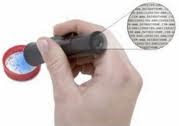
This viedo shows a technological innovation from DataDot Technology that was developed to prevent car theft. This innovation involves spraying microdots over various parts of a new car. In the video, the innovation is described, and there is a chronological explanation of the development and use of these microdots.
The site includes "Education notes" which give background information and statistics on the car-theft problem in Australia (this can be compared to the students' own country).
One example of the information in these notes is a list of other types of anti-theft devices, including keypad immobilisers, alarms with motioin sensors, and automatic anti-hijacking door locking.
After discussing information from the video, students had the assignment (in groups) to find out more information about each of these other devices, and then in class we had a "panel discussion" comparing and contrasting their merits. Each group tried to persuade the rest of the class to "vote" for the device they had researched.
Another idea is to start a brainstorming session where students think of their own ideas for future technological innovations to prevent car theft.
Sunday, June 23, 2013
Future shock or Coping with the future
In this BBC video, economist and futurist Robin Hanson presents ideas related to living as long as we can. He asks, "If any of our visions of technological revolution come true, then how will humans cope?"
Video: How to survive the future (4:04 minutes)
http://www.bbc.com/future/story/20121219-how-to-survive-the-future
Questions I asked students before viewing the video:
But when we started to discuss technological innovations for prolonging our life-span, they became very creative, and their focus depended on which type of engineering they were studying.
The ideas in the video mainly focus on cryogenics and on artificial intelligence. But Robin Hanson also talks about how he imagines preparing for a coping with life far in the future.
While we watched the video, the students took notes and afterward discussed Robin Hanson's ideas. This led to quite a lively discussion rating the pros and cons of each idea.
Video: How to survive the future (4:04 minutes)
http://www.bbc.com/future/story/20121219-how-to-survive-the-future
Questions I asked students before viewing the video:
- How long would you want to live?
- What do you think would be the best way(s) to live longer?
- What problems do you think there would be with a longer life?
- What current and future technologies do you think will help us to live longer?
- What skills or characteristics do you think you would need in order to cope with living far in the future?
But when we started to discuss technological innovations for prolonging our life-span, they became very creative, and their focus depended on which type of engineering they were studying.
The ideas in the video mainly focus on cryogenics and on artificial intelligence. But Robin Hanson also talks about how he imagines preparing for a coping with life far in the future.
While we watched the video, the students took notes and afterward discussed Robin Hanson's ideas. This led to quite a lively discussion rating the pros and cons of each idea.
Monday, June 17, 2013
Spatial Robots Website
![]() |
| Grid: Augmented Reality Gaming (by Sahar Fikouhi) |
The link: http://www.spatialrobots.com
The website's description is that it "features and critiques control technologies, interfaces and robotics as they pertain to the future of interactive architecture and space. Created by Miles Kemp in 2007, this website showcases architecture, space, interfaces, new media, websites, robotics, nanotechnology, reconfigurable objects, behavioral logic, new materials, and emerging technologies with emphasis placed on projects being interactive and spatial."
Posts include videos, short articles and links to other blogs. Readers are invited to submit news they think is "cool" to be featured on the website. This would be an interesting invitation to students at the beginning of the semester, to see what kinds of material they think is "cool news" to share with the class.
A recent addition to the website (currently on the home page) is Grid: Augmented Reality Gaming by Sahar Fikouhi, described as providing a "spatial configuration for real-time gaming at an architectural scale."
A video (3:12 minutes) shows how Grid works, and there's a link to Sahar Fikouhi's blog, MOB-ILITY, which has an article that explains the project (a good example for students) and more visuals related to the project.
For more information: saharfikouhi.blogspot.com/2011/12/grid-augmented-reality-gaming_27.html
Friday, June 7, 2013
Cartoons for ESL
I came across an interesting website
recently that has cartoons for English learners, with accompanying information.
For each cartoon there is a transcript
of the text, vocabulary explained,
and information about context (explaining
the cartoon and giving cultural background if relevant).
It’s fairly new (started 20 May 2013), but
invites the reader to “visit regularly” for cartoons. I told my students about
the website so that they can read it on their own – I figure that cartoons and
comics will be a big motivator! But in class we looked at the following cartoon
(originally from the website xkcd: http://xkcd.com/),
which describes itself as “a webcomic of romance, sarcasm, math, and language.”
This cartoon is at: http://www.comicsenglish.com/2013/05/xkcd-lack-of-insight/
The Comics English website explains all the
relevant vocabulary and, as Context, adds, “Notice that the first sentence is like
a formula. Speakers can put the name of any new technology they want in between
< … > (Google Glass in this instance).”
But my students and I went further. We
discussed the significance of having a “formula” by which you could discuss any
kind of new technology, even if you don’t know anything about it. We played
around with it a while, substituting other technologies the students know
about. Then we tried to think of other “formulas” for discussing technology,
art, literature, their studies, etc.
The cartoon made me think of the idea
behind a series of books (or more accurately, booklets) called Bluffer’s Guide. Topics in the series
include economics, poetry, skiing, sex, hiking, beer, quantum universe (and
many others). The series helps you “bluff your way with those who claim
currency in the subject. Nothing demanded, just a sense of humour.”
Saturday, June 1, 2013
Early innovation in mail sorting
Focusing on innovations of the past is not only informative, but allows students to reflect on the impact through time of that innovation. One interesting example I used with my students is the computerized mail sorting system introduced in Australia in 1966.
This website has a video clip from a 1966
promotional film of The
Redfern Mail Exchange’s computerized mail sorting system, which was quite an
innovation at the time. The clip describes the process of data entry for the
computers, conveyors for moving the letters, and the method of typing the
postcodes on each letter.
In addition the
website has Teacher’s Notes with “educational value
points” as well as Curator’s Notes with extra information.
Australia Post: This is the Mail (1966) (time = 2:59)
http://aso.gov.au/titles/sponsored-films/australia-post-mail/clip3/What the students might find interesting is the 1960s computer, which was extremely large and was operated through keypunch cards. Although it seems quite old-fashioned now, the clip makes clear that at the time it was fast and efficient, and quite an important development in the sorting and distribution of mail.
The video provides listening practice for students, and the information given is a very clear process description (with visual input). In addition to a discussion of the system, the students worked in small groups to write a summary of the process. A follow-up activity involved each group plotting the impact of this innovation to the mail-sorting systems used today. This involved further work on the students’ part to find out how mail is currently sorted in their own country.
Monday, May 27, 2013
Galileo Satellite Navigation
On the website of the European Commission, there is a section of Audiovisual Services. These videos provide a variety of topics in many technical areas. One in particular is about Galileo, which is described this way on the website:
“The Galileo programme is Europe 's initiative for a state-of-the-art global satellite navigation system, providing a highly accurate, guaranteed global positioning service under civilian control. The fully deployed system will consist of 30 satellites and the associated ground infrastructure. Galileo will be inter-operable with GPS and GLONASS, the two other global satellite navigation systems.”
The video is 2:51 minutes long, and provides practice in listening to different non-native speakers speaking English. There is one French speaker (with English subtitles). Each speaker mentions an advantage of Galileo and why it’s being implemented (what it will do). Students can listen and take notes.
Link to the Galileo video: http://ec.europa.eu/avservices/video/player.cfm?ref=I076944
Link to further information about the Galileo Satellite Navigation Programme: http://ec.europa.eu/enterprise/policies/satnav/galileo/programme/index_en.htm
This has a good graphic of the Galileo architecture. It’s a good example for students to consider for presentations and other situations when they use visuals to explain or describe something.
Thursday, May 16, 2013
Ekso Robot
My engineering
students enjoy learning about new innovations in the field of robotics – even
the students who are not studying robotic engineering. And I find that many
robotic innovations relate to many different areas of engineering, e.g.,
biomedical, electrical, mechanical as well as software programming.
An interesting
article I used in class recently is, “New Breed of Robotics Aims to Help People
Walk Again” from The New York Times (September 11, 2012). In addition to
a discussion about the topic, I used it to help students identify technical
vocabulary and guide them in writing a short process description.
Link to article:
In addition to
reading the article before the lesson, the students had to prepare the
following tasks:
- Make a list of nouns and verbs that you think are relevant for a process description of the Ekso. Include accompanying adjectives and/or prepositions.
- Focus on those areas of the text that describe some part of the Ekso. In class we will choose appropriate linking words to combine these sections to make one complete process description.
- Make a note of the features of the article that help a non-technical audience understand what it is and how it works.
- Focusing on the first six paragraphs, identify the verb tenses used. What “rules” can you notice about the use of these tenses? (This group had already had a review of the verb tenses featured in the article, but this information could also be make into a separate lesson on the uses of the present, present progressive, past, and present perfect tenses.)
This kind of work can
be done with other articles about a new innovation in your students’
engineering field.
For another text
on robotic engineering (with suggestions) see my Post 19: Cheetah Robot text to improve reading skills.
Monday, May 6, 2013
Planetary Society for engineering students
There are many aspects of space exploration that are of interest to engineering students in many different engineering fields. This website has a wide variety of material related to space technology, funding, photos, scientists, etc.
Link to home: http://www.planetary.org
One part of the website is Planetary Radio, which is useful for both the classroom and for students to listen to privately. There is a lot of supplementary material for each program's topic. The program is described on the website this way:
"Each week, Planetary Radio visits with a scientist, engineer, project manager, astronaut, advocate or writer who provides a unique and exciting perspective on the exploration of our solar system and bezond. We also showcase regular features that raise your I.Q. while they put a smile on your face."
These features include contest questions, which students could participate in. Answers are posted a week later.
Planetary Radio: http://www.planetary.org/multimedia/planetary-radio/
One example of a radio program that my students enjoyed was The Basics of Interplanetary Flight. This was not only an interesting topic, but it provided material for technical process descriptions (relevant to many different engineering fields).
http://www.planetary.org/multimedia/planetary-radio/show/2013/20130408-dave-doody-basics-interplanetary-flight.html
In addition to the radio programs, there are podcasts, videos, blogs, and a section of NASA photos.
Link to home: http://www.planetary.org
One part of the website is Planetary Radio, which is useful for both the classroom and for students to listen to privately. There is a lot of supplementary material for each program's topic. The program is described on the website this way:
"Each week, Planetary Radio visits with a scientist, engineer, project manager, astronaut, advocate or writer who provides a unique and exciting perspective on the exploration of our solar system and bezond. We also showcase regular features that raise your I.Q. while they put a smile on your face."
These features include contest questions, which students could participate in. Answers are posted a week later.
Planetary Radio: http://www.planetary.org/multimedia/planetary-radio/
One example of a radio program that my students enjoyed was The Basics of Interplanetary Flight. This was not only an interesting topic, but it provided material for technical process descriptions (relevant to many different engineering fields).
http://www.planetary.org/multimedia/planetary-radio/show/2013/20130408-dave-doody-basics-interplanetary-flight.html
In addition to the radio programs, there are podcasts, videos, blogs, and a section of NASA photos.
Sunday, April 28, 2013
Encyclopedia of Life
A very interesting website described as: "an online evolving library of all life on the planet," the Encyclopedia of Life is a source of podcasts and articles useful for many types of listening, reading and discussion activities.
Link: http://eol.org
The podcasts are about 5 minutes long, so they're very practical to use in the classroom or to assign for homework. The narrator is easy to understand, speaking very clearly and at a balanced tempo. In addition, each podcast has a downloadable script in pdf-format.
Very useful for teachers are the educational materials in each section. The EOL Podcast Guide for Educators includes "an overview of the podcast and features of each episode and links to relevant educational materials."
There are also interviews ("Meet the scientist") of the people involved in each of the topic areas.
An example I used was the segment with an interview of Edward O. Wilson, in which he talks about how he became interested in ants. My robotic engineering students found this interesting because we had looked at material about how "robotic swarms" were inspired by the swarm behavior of ants. My biomedical engineering students were interested in segments focusing on scientists in their field. This material led to a discussion of how scientists and engineers become interested in their field, and this, in turn, inspired students to talk about how and when they became interested in their own field of engineering.
Podcast with E.O. Wilson: http://education.eol.org/podcast/eo-wilson
Podcast script: http:education.eol.org/sites/default/files/EOWilson.pdf
Link: http://eol.org
The podcasts are about 5 minutes long, so they're very practical to use in the classroom or to assign for homework. The narrator is easy to understand, speaking very clearly and at a balanced tempo. In addition, each podcast has a downloadable script in pdf-format.
Very useful for teachers are the educational materials in each section. The EOL Podcast Guide for Educators includes "an overview of the podcast and features of each episode and links to relevant educational materials."
There are also interviews ("Meet the scientist") of the people involved in each of the topic areas.
An example I used was the segment with an interview of Edward O. Wilson, in which he talks about how he became interested in ants. My robotic engineering students found this interesting because we had looked at material about how "robotic swarms" were inspired by the swarm behavior of ants. My biomedical engineering students were interested in segments focusing on scientists in their field. This material led to a discussion of how scientists and engineers become interested in their field, and this, in turn, inspired students to talk about how and when they became interested in their own field of engineering.
Podcast with E.O. Wilson: http://education.eol.org/podcast/eo-wilson
Podcast script: http:education.eol.org/sites/default/files/EOWilson.pdf
Monday, April 22, 2013
Cheetah Robot text to improve reading skills
I often have students read articles about innovations in their field. This promotes class discussion and helps focus them on model text types (for example, process descriptions: see Posts 2, 7, 16, for example). In addition, I use these texts to work on students' reading skills. An example I used recently is an article from MIT's website: MIT 'cheetah' robot rivals running animals in efficiency (March 8, 2013), which describes their "Cheetah Robot" and the energy-efficient motor they are developing for it.
Link to article: http://web.mit.edu/newsoffice/2013/mit-cheetah-robot-0308.html
When I assign an article for students to read, I also give them a list of questions about the topic as well as language features to look for in the article. This helps to focus them on features they might not otherwise notice, and also provides points of discussion for the classroom. And, quite frankly, it also increases the chances that students will actually read the text carefully before the lesson!
The language features I like to focus on are those that are somehow related to the text type (description, process, explanation), and the innovation itself (in this article: movement, energy, improvement, e.g.). Here are some features that I had students identify in this article, with only a few examples of each (there are many more for each feature):
Areas of the text that explain or give examples:
Link to article: http://web.mit.edu/newsoffice/2013/mit-cheetah-robot-0308.html
When I assign an article for students to read, I also give them a list of questions about the topic as well as language features to look for in the article. This helps to focus them on features they might not otherwise notice, and also provides points of discussion for the classroom. And, quite frankly, it also increases the chances that students will actually read the text carefully before the lesson!
The language features I like to focus on are those that are somehow related to the text type (description, process, explanation), and the innovation itself (in this article: movement, energy, improvement, e.g.). Here are some features that I had students identify in this article, with only a few examples of each (there are many more for each feature):
Areas of the text that explain or give examples:
- about the size and weight of an actual cheetah
- such as a push, or a change in terrain
- such as energy lost through a heavy-footed step
- simulating the structure of tendons along a bone
- also known as cost of transport
Words/phrases that collocate with "energy":
- wasted energy
- minimize energy waste
- energy dissipates
- capture this energy
- reduce energy loss
Verbs of what researchers "do":
- design
- propose
- analyze
- simulate
- hypothesize
Examples of language that indicates change:
- quickly adjust
- respond to outside forces
- minimize
- (further) reduce
- made a huge difference
Comparatives/superlatives:
- fewer gears
- less machinery
- more efficient than
- more powerful
- simpler
Verbs of movement:
- outpace
- trot (continuously)
- gallop
- traverse
- move along
The feedback I've gotten from students indicates that they appreciate the focused work on vocabulary and how it helps them learn vocabulary relevant to their field. In addition, they practice a way of reading a text that they hadn't done before.
Subscribe to:
Posts (Atom)


